

🔧 Introduction: Why Welding Electrodes Matter
In the world of metal fabrication, construction, and heavy manufacturing, welding is more than just a joining process — it’s the backbone of durability and design. However, a weld is only as strong as the materials and techniques behind it. One such critical material is the welding electrode.
A welding electrode plays a direct role in how a weld behaves, performs, and lasts. From hobbyist fabricators to industrial professionals, understanding this tool is essential for achieving safe and reliable results.
⚙️ What Is a Welding Electrode?
A welding electrode is a metallic wire or rod that conducts electrical current to create a welding arc. Depending on its type, it may melt and become part of the weld (consumable) or simply initiate and maintain the arc (non-consumable).
In simple terms, if welding is the act of bonding metals, then the electrode is the medium through which that bond is made possible.
🧩 Why Are Welding Electrodes Important?
Welding electrodes are not one-size-fits-all. Their chemical composition, physical coating, and performance attributes influence multiple factors, including:
-
Strength and toughness of the joint
-
Penetration depth and arc stability
-
Weld appearance and finish
-
Resistance to corrosion, cracking, or defects
-
Compatibility with specific base metals and positions
👉 Choosing the wrong welding electrode can result in failed joints, increased costs, and rework. Therefore, understanding their types and uses is not just helpful — it’s essential.
🔀 Types of Welding Electrodes Based on Consumption
Welding electrodes are primarily divided into two types:
🟠 1. Consumable Electrodes
These electrodes melt during the welding process and become a part of the weld pool. They are commonly used in most arc welding methods.
Used In:
-
Shielded Metal Arc Welding (SMAW / Stick)
-
Gas Metal Arc Welding (GMAW / MIG)
-
Flux-Cored Arc Welding (FCAW)
-
Submerged Arc Welding (SAW)
Advantages:
-
Provide filler metal directly
-
Allow high deposition rates
-
Easy to automate in some processes
Limitations:
-
Require regular replacement
-
Can produce more spatter if poorly chosen
🔵 2. Non-Consumable Electrodes
Non-consumable electrodes do not melt. Instead, they generate an arc while an external filler rod (if needed) completes the weld.
Used In:
-
Gas Tungsten Arc Welding (GTAW / TIG)
-
Plasma Arc Welding (PAW)
Advantages:
-
Precise, clean welds
-
No contamination from electrode material
-
Longer electrode life
Limitations:
-
Requires greater operator skill
-
Slower deposition and welding speed
📊 Key Differences: Consumable vs. Non-Consumable Electrodes
| Feature | Consumable Electrodes | Non-Consumable Electrodes |
|---|---|---|
| Melting | Yes | No |
| Provides filler metal | Yes | Requires separate filler |
| Welding processes | MIG, Stick, SAW, FCAW | TIG, Plasma |
| Arc stability | Varies by coating | Extremely stable |
| Skill required | Moderate | High |
| Surface finish | Good to Fair | Excellent |
🧠 Did You Know?
Electrodes are often referred to as “welding rods” in stick welding. However, not all electrodes are rods, and not all rods are consumable. Knowing this terminology helps avoid confusion while reading specifications or data sheets.
Types of Welding Electrodes – By Process, Coating, Current & Composition
Choosing the right welding electrode starts with understanding the many ways they are classified. Electrodes vary by welding process, coating type, current compatibility, and base metal composition — each playing a critical role in weld performance.
Let’s break it all down clearly and practically.
🔩 1. Welding Electrodes by Welding Process
Different welding methods require specific types of electrodes. Here’s how they align:
🔹 A. SMAW Electrodes (Stick Welding)
SMAW electrodes are stick-shaped consumables with a flux coating. The flux protects the weld pool from atmospheric contamination by generating shielding gas and slag.
Common Use Cases:
-
Pipe welding
-
Structural steel
-
Repairs and maintenance
Popular Types:
-
E6010 – Deep penetration, used for root passes
-
E6013 – Smooth arc, good for beginners
-
E7018 – Low hydrogen, high-strength welds
🔹 B. GMAW Electrodes (MIG Welding)
MIG electrodes are continuous solid wires fed through a welding gun. They require external shielding gas like CO₂ or Argon.
Electrode Types:
-
Solid wire electrodes – Clean welds, minimal slag
-
Metal-cored wires – High deposition rates
-
Flux-cored wires – Self-shielding or gas-shielded
Applications:
-
Automotive bodywork
-
Fabrication shops
-
Sheet metal welding
🔹 C. GTAW Electrodes (TIG Welding)
TIG uses non-consumable tungsten electrodes to create the arc. Filler metal is added separately, if required.
Tungsten Electrode Types:
-
Thoriated (red tip) – Great arc stability (DC)
-
Ceriated (grey) – Low amperage welding
-
Lanthanated (blue) – Multi-purpose (AC/DC)
-
Zirconiated (white) – Best for aluminum (AC)
Best For:
-
Stainless steel
-
Titanium
-
Thin-gauge metals
🔹 D. FCAW Electrodes (Flux-Cored Arc Welding)
These tubular wires are filled with flux and may or may not need external shielding gas.
Types:
-
Self-shielded – No gas required, ideal for outdoor welding
-
Gas-shielded – Clean welds, less spatter
Used In:
-
Structural steel
-
Heavy equipment
-
Shipbuilding
🔹 E. SAW Electrodes (Submerged Arc Welding)
Used with granular flux, SAW electrodes are bare wires submerged under flux during welding.
Advantages:
-
Very high deposition rate
-
Minimal spatter
-
Excellent for long, straight welds
🌫️ 2. Welding Electrodes by Coating Type
Electrode coatings impact arc behavior, weld quality, slag formation, and shielding properties. Below are the common types:
🟡 A. Cellulosic Coating
These coatings contain organic cellulose compounds.
Key Features:
-
High arc force and deep penetration
-
High gas generation for shielding
-
Excellent for vertical and overhead welding
Example: E6010, E6011
⚪ B. Rutile Coating
Rutile electrodes are made with titanium dioxide (TiO₂).
Advantages:
-
Smooth and stable arc
-
Low spatter
-
Easy slag removal
-
Good bead appearance
Example: E6013, E7014
🔵 C. Basic (Low-Hydrogen) Coating
These are designed to reduce hydrogen content and prevent cracking.
Benefits:
-
High mechanical strength
-
Tough and crack-resistant welds
-
Ideal for structural steel and critical applications
Example: E7018
⚫ D. Iron Powder Coating
Mixed with rutile or basic coatings, iron powder increases metal deposition.
Best For:
-
Flat or horizontal welds
-
High productivity applications
Example: E7024
🟣 E. Oxidizing Coating
These control oxygen levels in the weld pool, improving bead consistency and reducing impurities.
Where Used:
-
Industrial heavy welding
-
Applications demanding stable metallurgy
⚡ 3. Welding Electrodes by Current Type
Choosing electrodes compatible with your welding current is crucial. Here’s how they differ:
| Current Type | Typical Electrodes | Notes |
|---|---|---|
| AC Only | E6013, E7024 | Stable arc, good for general use |
| DC Only | E6010 (DCEP), E7015 | Deep penetration, directional control |
| AC/DC | E7018, E6011 | Versatile across multiple setups |
Note:
-
DCEP (DC Electrode Positive): Deeper penetration
-
DCEN (DC Electrode Negative): Shallow welds, fast fill
🔩 4. Welding Electrodes by Material Composition
Electrodes must match or complement the metal being welded. Below are some key types:
🟢 A. Mild Steel Electrodes
Characteristics:
-
Affordable
-
Easy to use
-
Used in general fabrication and repairs
Example: E6013, E7018
🟤 B. Stainless Steel Electrodes
Benefits:
-
Corrosion resistance
-
Strength at high temperatures
-
Suitable for food-grade or chemical processing
Example: E308L, E309L, E316L
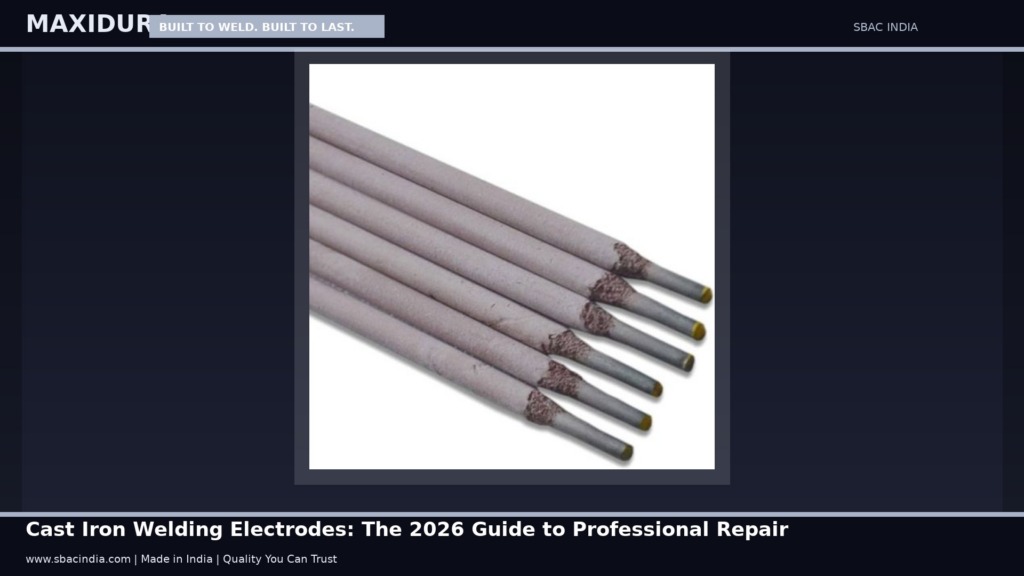
🔴 C. Cast Iron Electrodes
These are often nickel-based and formulated to avoid cracking during welds.
Use Cases:
-
Engine blocks
-
Foundry repairs
-
Pump housings
⚪ D. Aluminum Electrodes
Designed specifically for AC welding of aluminum and its alloys.
Advantages:
-
Clean arc
-
Strong, lightweight welds
-
Excellent corrosion resistance
Example: E4043, E5356
🟠 E. Hardfacing Electrodes
Hardfacing electrodes are built for abrasion and impact resistance. They apply a wear-resistant layer on components.
Applications:
-
Crushers
-
Tractor parts
-
Mining and construction tools
Understanding AWS Welding Electrode Coding System
Selecting a welding electrode isn’t just about shape and size — it’s also about understanding what’s written on the electrode itself. Most commercial welding electrodes are labeled using the AWS (American Welding Society) classification system. These codes provide a wealth of information, helping you make the right choice for strength, position, and performance.
Let’s break it down.
🏷️ What Is AWS Electrode Coding?
The AWS electrode code is a standardized alphanumeric system that describes the properties of a welding electrode. This includes:
-
Tensile strength
-
Welding position suitability
-
Type of flux coating
-
Current compatibility (AC/DC)
You’ll commonly see codes like E6013, E7018, or E308L printed on electrodes.
🔍 Decoding a Mild Steel Electrode Example: E7018
Let’s take the E7018 stick electrode and understand what each digit means:
| Code Section | Meaning |
|---|---|
| E | Electrode (for arc welding) |
| 70 | Tensile strength (in ksi → 70,000 psi) |
| 1 | Welding position (1 = all positions) |
| 8 | Coating type & current compatibility |
🧱 Tensile Strength – The First Two Digits
These digits represent the minimum tensile strength of the weld metal in thousands of pounds per square inch (ksi).
| Code | Strength | Common Use |
|---|---|---|
| 60 | 60,000 psi | Light fabrication, mild steel |
| 70 | 70,000 psi | Structural steel, heavy welding |
| 80+ | 80,000+ psi | High-strength, critical welds |
Want more on tensile strength and hardness? Check our Hardfacing Electrode Guide for strength-focused rods.
🧍 Welding Positions – The Third Digit
This number tells you which welding positions are suitable for the electrode.
| Code | Position |
|---|---|
| 1 | All positions (flat, horizontal, vertical, overhead) |
| 2 | Flat & horizontal only |
| 3 or more | Specialized cases |
For instance, E6013 and E7018 both have “1”, meaning they can be used in all positions — perfect for structural welds.
🧪 Coating Type & Current Compatibility – The Fourth Digit
This digit identifies both the flux coating type and the type of current (AC/DC) the electrode supports.
Here’s a simplified chart:
| Last Digit | Coating Type | Current Type |
|---|---|---|
| 0 | Cellulosic sodium | DC+ only |
| 1 | Cellulosic potassium | AC / DC+ / DC− |
| 3 | Rutile potassium | AC / DC |
| 4 | Rutile iron powder | AC / DC |
| 5 | Basic low hydrogen (Na) | DC+ only |
| 6 | Low hydrogen (K) | AC / DC+ |
| 8 | Low hydrogen + iron powder | AC / DC+ |
Want to dive deeper into these flux types? Visit our detailed Electrode Coating Types Explained.
⚙️ Other Common AWS Electrode Codes
Let’s look at a few more electrode codes across different categories:
🧲 E6010
-
Deep penetration
-
All positions
-
DC+ only
-
Ideal for pipelines and root passes
⚡ E6013
-
Smooth arc and easy slag removal
-
Great for beginners
-
AC/DC compatible
-
Suitable for general-purpose welding
🔧 E7014
-
High iron powder content
-
Flat and horizontal positions
-
High deposition rate
-
Used in thick plate welding
🏗️ E7018
-
Low-hydrogen coating
-
Used in structural steel, bridges, pressure vessels
-
Requires storage in rod ovens to prevent moisture absorption
-
For more, check How to Store Welding Electrodes Properly
📜 Stainless Steel Electrode Coding (e.g., E308L-16)
For stainless steel, the AWS system looks like this:
| Code | Meaning |
|---|---|
| E308L-16 | Stainless steel alloy type (308L) |
| Low carbon content (“L”) | |
| “16” = type of coating and current compatibility |
-
E308 is used for 304/304L stainless steels
-
The suffix “L” indicates low carbon — better corrosion resistance
-
The “16” indicates rutile coating, AC or DC+ compatibility
🛠️ Why AWS Coding Matters in Electrode Selection
Understanding AWS coding helps you:
-
Match electrodes to base metals
-
Ensure proper weld strength
-
Avoid welding failures or defects
-
Improve compliance with WPS (Welding Procedure Specification)
If you’re working with specialized jobs (e.g., manganese steels, high-heat zones), it’s important to refer to your welding codes and procedure documents.
For advanced applications, refer to our guide on Special Welding Electrodes including hardfacing, underwater, and cast iron rods.
Most Common Stick Welding Electrodes and Their Applications
Stick welding (SMAW) remains one of the most widely used welding methods across industries due to its simplicity, portability, and versatility. Whether you’re welding structural steel or performing repairs in remote locations, SMAW electrodes are a go-to solution.
Let’s explore the most commonly used stick electrodes, their characteristics, and when to use them.
🛠️ 1. E6010 – Deep Penetration for Critical Welds
Overview:
E6010 is a cellulosic electrode known for its deep arc penetration and aggressive arc force.
Key Properties:
-
High penetration into dirty, painted, or rusty surfaces
-
Excellent for root passes
-
Produces a tight, fast-freezing weld pool
-
DC+ (DCEP) only
Best For:
-
Pipeline welding
-
Structural welding
-
Maintenance and repair
-
Welding in windy outdoor conditions
🔗 Related: Stick Welding in Outdoor Conditions – Best Rods to Use
⚒️ 2. E6011 – AC Equivalent of E6010
Overview:
E6011 offers similar performance to E6010 but can be used with both AC and DC current.
Key Properties:
-
Deep penetration
-
Flexible for different current sources
-
Excellent for fieldwork and multi-position welding
-
Handles rust, oil, and dirt well
Best For:
-
Home repairs
-
Farm equipment
-
Light structural jobs
-
Welding in AC-only environments
⚙️ 3. E6013 – The Beginner-Friendly Electrode
Overview:
E6013 is one of the most widely used electrodes for general-purpose welding.
Key Properties:
-
Smooth and stable arc
-
Easy slag removal
-
Minimal spatter
-
Works with AC, DC+, and DC−
Best For:
-
Sheet metal
-
Small fabrication jobs
-
Auto body repair
-
DIY welding
Note:
If you’re just learning to weld, E6013 is a great place to start. You’ll find more guidance in our blog on Top Stick Electrodes for Beginners.
🏗️ 4. E7014 – High Deposition Rate for Production Welding
Overview:
E7014 has an iron powder rutile coating, increasing deposition and welding speed.
Key Properties:
-
High weld metal deposition
-
Excellent for flat and horizontal positions
-
Smooth bead appearance
-
Suitable for thicker materials
Best For:
-
Structural components
-
Heavy fabrication
-
Welding thick plates
🛡️ 5. E7018 – Low Hydrogen Electrode for Structural Strength
Overview:
E7018 is the standard for low-hydrogen, high-strength welding. It’s commonly used where weld integrity is critical.
Key Properties:
-
Moisture-resistant coating (must be stored in rod oven)
-
Produces ductile, crack-resistant welds
-
AC or DC+ compatible
-
Low spatter, easy slag removal
Best For:
-
Pressure vessels
-
Bridges and structural steel
-
Pipelines
-
Welding thick or high-carbon steels
🔗 Related: How to Store Low Hydrogen Electrodes Correctly
🧪 6. Specialized Electrodes: E7024, E7015, etc.
Some jobs require more niche electrodes. A few examples include:
🔸 E7024
-
High-speed, flat-position electrode
-
Heavy iron powder content
-
Used in automated or semi-auto welding
🔸 E7015
-
Low hydrogen sodium coating
-
DC+ only
-
Used for vertical or overhead heavy welds
Explore more in our upcoming post on Advanced SMAW Electrodes for Heavy Industry.
📋 Comparison Table: Popular SMAW Electrodes
| Electrode | Coating Type | Position | Current | Best Use |
|---|---|---|---|---|
| E6010 | Cellulosic Sodium | All | DC+ | Pipelines, deep penetration |
| E6011 | Cellulosic Potassium | All | AC / DC | Rusty metal, outdoor welds |
| E6013 | Rutile Potassium | All | AC / DC | Sheet metal, general use |
| E7014 | Rutile + Iron Powder | Flat/Horizontal | AC / DC | High-deposition welds |
| E7018 | Low Hydrogen | All | AC / DC+ | Structural welding |
| E7024 | Iron Powder | Flat | AC / DC | Production welding |
How to Choose the Right Welding Electrode – A Practical Guide
Choosing the right welding electrode is like picking the right key for a lock — if it doesn’t fit, the result will be weak, messy, or fail entirely. Whether you’re welding structural steel, stainless, cast iron, or hard-facing surfaces, you must consider multiple factors to ensure a strong and defect-free weld.
Here’s your step-by-step guide to make the perfect match.
🔍 1. Identify the Base Metal Type
Start by analyzing the material you’re welding. The electrode must be chemically compatible with the base metal to ensure proper fusion and mechanical strength.
| Base Metal | Recommended Electrode Type |
|---|---|
| Mild Steel | E6013, E7018 |
| Stainless Steel | E308L, E316L |
| Cast Iron | Nickel-based or FeNi electrodes |
| Aluminum | E4043, E5356 (TIG/MIG) |
| Hardfacing Alloys | HF-Series (wear-resistant rods) |
👉 Tip: When in doubt, perform a grind test — observe spark pattern and color to estimate material type. Or refer to our Welding Electrodes for Mild Steel, Stainless & CI.
🔧 2. Determine the Welding Position
Electrodes are rated for specific positions. Some are all-position, while others are limited to flat or horizontal use.
| Code Digit | Position |
|---|---|
| 1 | All positions |
| 2 | Flat/Horizontal |
Examples:
-
E7018 → All-position (structural, vertical welds)
-
E7024 → Flat only (production welds)
If you’re unsure, check the third digit of the AWS code. Learn more in our AWS Electrode Numbering System Guide.
⚡ 3. Check Power Source – AC or DC
Your welding machine’s power output determines which electrodes are usable. Not all rods work with both AC and DC.
| Current | Compatible Electrodes |
|---|---|
| AC | E6011, E6013, E7018, E7024 |
| DC | E6010, E7015, E7018 |
| AC/DC | E7018, E6013 |
Pro Tip:
Always verify the last digit of the AWS code to understand current compatibility.
🧪 4. Match Mechanical Properties
Weld strength should meet or exceed the requirements of the base metal. Focus on:
-
Tensile strength (60,000 – 80,000 psi common range)
-
Ductility (how much the weld can stretch)
-
Impact resistance (especially in cold environments)
For high-strength jobs (e.g., bridges, cranes), E7018 or higher is a good starting point.
🔗 Explore E7018 Electrode Applications in Structural Welding
🌡️ 5. Consider Environmental Conditions
Some electrodes work better than others in harsh or unpredictable environments.
| Condition | Recommended Electrodes |
|---|---|
| Outdoor / Windy | E6010, E6011 (cellulosic) |
| Humid Conditions | E7018 (must be oven-dried) |
| Confined Spaces | Low-spatter electrodes like E6013 |
Outdoor welding? You’ll want cellulosic rods that create their own shielding gas. Read: Best Welding Rods for Outdoor Use
🧰 6. Analyze Joint Design and Fit-Up
Tight joints with little to no gap need penetrating electrodes. Wider joints or poor fit-ups benefit from fill-heavy electrodes.
| Fit-up Type | Suggested Rods |
|---|---|
| Tight Root Pass | E6010, E7010 (deep arc) |
| Gapped Joints | E6013, E7024 (easy fill) |
| Vertical Welds | E7018 (controlled arc) |
🧾 7. Review Code Requirements (If Any)
If you’re working under welding codes or procedures (WPS/PQR), you may be required to use specific electrodes for compliance.
Examples:
-
ASME Boiler Codes
-
AWS D1.1 Structural Code
-
ISO standards in fabrication
Always cross-check electrode choices with the governing documents. We’ve simplified this in Welding Code Compliance – Electrode Selection Made Easy
🧪 8. Think About Weld Appearance and Clean-up
Need a clean bead with minimal spatter? Or can you afford more slag if strength is the priority?
| Preference | Best Electrode |
|---|---|
| Smooth finish | E7018, E6013 |
| Deep penetration | E6010, E6011 |
| Easy slag removal | E6013, E7014 |
✅ Quick Electrode Selection Checklist
✔ Know your base metal
✔ Match welding position
✔ Check current source
✔ Evaluate mechanical needs
✔ Consider site/environment conditions
✔ Look at joint design
✔ Review applicable codes
✔ Decide based on desired weld finish
Want a printable version? Download our Electrode Selection Quick Sheet (PDF)
Electrode Sizes, Storage Tips, and Usage Techniques
Once you’ve selected the correct type of welding electrode, the next step is using it correctly. That means choosing the right size, storing it properly, and applying the correct technique. Small mistakes here can lead to big failures — from porosity to cracking or even complete weld rejection.
Let’s make sure that doesn’t happen.
📐 1. Understanding Electrode Sizes
Welding electrodes come in a variety of diameters, which directly affect amperage, penetration, deposition rate, and control.
🔹 Common Electrode Diameters (mm)
| Size (mm) | Typical Amperage Range | Use Case |
|---|---|---|
| 2.5 | 40–90 A | Thin sheets, light fabrication |
| 3.15 | 70–110 A | Medium thickness steel |
| 4.0 | 90–140 A | Structural work, heavier materials |
| 5.0 | 130–180 A | Heavy fabrication, thick base metal |
Tip:
Smaller diameters = more control, especially for vertical or overhead positions.
Larger diameters = deeper penetration, faster build-up in flat positions.
🔗 Related: Choosing Electrode Size Based on Application
🔌 2. Selecting Correct Welding Current (Amperage)
Using too little current = poor penetration and arc instability.
Too much = excessive spatter, undercut, or burn-through.
Use this rule of thumb:
30–40 Amps per mm of electrode diameter
For example:
-
3.15 mm rod → 90–110 A
-
5.0 mm rod → 130–180 A
⚠️ Always check manufacturer guidelines — especially for specialized rods like low-hydrogen electrodes or hardfacing rods.
🧊 3. Storage & Handling Tips for Electrodes
Improper storage can ruin your electrodes, leading to porosity, cracking, and weld failure. Moisture is the #1 enemy — especially for low-hydrogen electrodes like E7018.
✅ Basic Storage Tips:
-
Keep in sealed containers after opening
-
Use desiccant pouches to absorb moisture
-
Label electrode boxes by type and expiry
🔥 Special for E7018 & Low-Hydrogen Rods:
| Step | Why It’s Important |
|---|---|
| Use rod ovens (130–150°C) | Keeps rods moisture-free |
| Store rods <4 hours outside | After exposure, they must be re-baked |
| Never weld with damp rods | Prevents hydrogen-induced cracking |
📘 Learn more: How to Store Low Hydrogen Electrodes Properly
🛠️ 4. Electrode Angle & Technique Tips
Mastering stick welding takes time, but understanding a few basic techniques can improve weld quality instantly.
📐 Electrode Angles
| Position | Travel Angle | Key Technique |
|---|---|---|
| Flat | 10–15° push | Keep short arc |
| Vertical Up | 5–10° upward | Use weaving or whipping |
| Overhead | 0–10° drag | Maintain tight arc, fast travel |
| Vertical Down | Not recommended with most rods |
🔄 Weaving vs. Stringer Beads
-
Stringer Beads → Narrow beads, best for low-hydrogen rods (E7018)
-
Weave Beads → Wider, used for gap filling or vertical welds
Tip:
-
Don’t weave too wide — max 3× electrode diameter
-
Pause at sidewalls for full penetration
🚫 Common Mistakes to Avoid
-
Using oversized electrodes for thin metals
-
Welding with damp or expired rods
-
Applying wrong current polarity
-
Ignoring manufacturer recommendations
-
Skipping preheat/postheat where needed (e.g., cast iron)
Welding Rod vs Wire – What’s the Difference?
When someone says “welding rod,” they might mean a stick electrode, a TIG filler rod, or even a MIG wire spool. Each is technically an electrode but behaves very differently.
So, what exactly is the difference between welding rods and welding wires, and how do they vary across welding processes like SMAW, GMAW, and GTAW?
Let’s demystify this once and for all.
⚙️ 1. Electrode Definition Recap
An electrode is any material that conducts current to form an arc. It can be:
-
Consumable → melts to form the weld
-
Non-consumable → does not melt (e.g., tungsten)
Whether it’s a rod or a wire, its function depends on the welding process.
🔩 2. SMAW (Stick Welding) – Covered Welding Rods
SMAW uses rigid, flux-coated welding rods. These are:
-
Manually fed
-
Consumable
-
Covered in flux, which generates shielding gas and slag
Examples: E6010, E6013, E7018
Features:
-
Portable and versatile
-
Great for outdoor and repair jobs
-
No external shielding gas needed
🔗 Explore Most Common Stick Electrodes and Uses
🧵 3. GMAW (MIG Welding) – Spool Wire Electrodes
MIG welding uses continuous wire electrodes fed through a motorized gun. These require external shielding gas (like CO₂ or Ar-CO₂ mixes).
Wire Types:
-
ER70S-6 (solid wire)
-
E71T-1 (flux-cored)
Advantages:
-
High deposition rate
-
Minimal slag
-
Great for clean, indoor environments
Wire vs Rod:
-
Wire is automatic/semi-auto
-
Comes in spools (0.8 mm to 1.6 mm typical sizes)
-
Requires precise machine setup
🔗 MIG vs Stick Welding – Which Is Better for You?
🔧 4. FCAW – Flux-Cored Wires
Flux-Cored Arc Welding uses tubular wire electrodes filled with flux.
-
May be self-shielded or gas-shielded
-
Offers deeper penetration
-
Higher speed than stick welding
Best For:
-
Structural welding
-
Outdoor fabrication
-
Shipbuilding and heavy steel
Electrode Type:
-
E71T-GS (self-shielded)
-
E71T-1C (gas-shielded)
🛠️ 5. GTAW (TIG Welding) – Bare Welding Rods (Non-Electrified)
TIG welding uses a non-consumable tungsten electrode to create the arc, while the filler metal is added manually as a rod.
Important Distinction:
The filler rod is not the electrode — the tungsten is!
Common Filler Rods:
-
ER70S-2 → for carbon/mild steel
-
ER308L → stainless steel
-
ER4043 → aluminum
Features:
-
Precise, clean welds
-
Great for thin materials
-
No spatter or slag
🔗 TIG Welding Rods: How to Choose the Right One
⚖️ 6. Welding Rod vs Wire – Side-by-Side Comparison
| Feature | Stick Rod (SMAW) | MIG Wire (GMAW) | TIG Rod (GTAW) |
|---|---|---|---|
| Form | Rigid coated rod | Continuous spool | Bare cut-length rod |
| Feed Type | Manual | Auto (gun-fed) | Manual |
| Flux/Shielding | In coating | External gas | External gas |
| Use Case | Repair, field jobs | Fabrication | Precision welding |
| Skill Level | Medium | Easy/Intermediate | High |
| Common Sizes | 2.5–5.0 mm | 0.8–1.6 mm | 1.6–3.2 mm |
🧪 7. How to Choose Between Rods and Wires
✅ Choose Welding Rods (Stick) if:
-
You’re working outdoors or in windy environments
-
Portability and no shielding gas is a plus
-
You’re doing maintenance, repair, or general fabrication
✅ Choose Welding Wires (MIG/TIG) if:
-
You have a controlled indoor setup
-
You need high productivity or clean finish
-
You work on thin sheets, auto parts, or ornamental metal
🔗 Welding Process Comparison – SMAW, GMAW, GTAW & FCAW
Common Welding Electrode Defects and How to Avoid Them
Even when you’ve selected the right welding electrode, defects can still creep in — weakening the weld and compromising its integrity. Whether it’s porosity, cracking, or slag inclusion, most welding defects are caused by poor technique, wrong parameters, or electrode misuse.
This guide walks you through the most common defects and how to prevent them.
🧪 1. Porosity (Gas Pockets in the Weld)
What it is:
Small holes or bubbles inside the weld caused by trapped gas.
Causes:
-
Contaminated base metal (rust, oil, paint)
-
Moisture in the electrode
-
Long arc length
-
Poor shielding (in TIG/MIG)
Prevention Tips:
-
Clean the work surface properly
-
Store electrodes in a dry oven (especially E7018)
-
Use proper arc length (2–3 mm max)
-
Avoid welding over anti-spatter spray or markings
🔗 How to Store Welding Rods to Prevent Porosity
🪓 2. Cracking (Hot/Cold Cracks)
What it is:
Fractures in the weld bead or heat-affected zone (HAZ), occurring immediately or after cooling.
Causes:
-
High carbon or alloy content in base metal
-
Hydrogen in the weld from moisture or coating
-
Rapid cooling or improper preheat/postheat
-
Excessive restraint (no room for shrinkage)
Prevention Tips:
-
Preheat thicker or hardenable steels
-
Use low-hydrogen electrodes (E7018, properly stored)
-
Use proper interpass temperatures
-
Design joints with correct fit-up and stress relief
🧱 3. Slag Inclusion
What it is:
Trapped slag (flux residue) inside the weld, leading to poor fusion and weak points.
Causes:
-
Incomplete slag removal between passes
-
Wrong electrode angle
-
Low heat input
-
Contaminated joint edges
Prevention Tips:
-
Clean slag thoroughly between passes
-
Maintain correct arc and travel angle (10–15° drag)
-
Use the correct current for your electrode size
-
Avoid weaving too wide
🔗 Understanding Electrode Techniques for Clean Welds
🕳️ 4. Undercut
What it is:
A groove melted into the base metal next to the weld bead that isn’t filled.
Causes:
-
Excessive heat input
-
Fast travel speed
-
Wrong torch/electrode angle
-
Poor filler metal control
Prevention Tips:
-
Reduce amperage if undercut appears
-
Keep travel speed consistent and moderate
-
Angle electrode correctly (5–15°)
-
Add slight weaving for edge fill
⚡ 5. Incomplete Fusion / Lack of Penetration
What it is:
The weld doesn’t bond properly to the base metal or previous pass.
Causes:
-
Low current or short arc
-
Poor electrode manipulation
-
Cold base metal (no preheat)
-
Dirty surfaces
Prevention Tips:
-
Use the correct amperage
-
Preheat thicker materials
-
Ensure good joint access and fit-up
-
Use the correct travel speed and weave motion
🔎 Defect Comparison Chart
| Defect | Visible Signs | Common Cause | Fix/Prevention |
|---|---|---|---|
| Porosity | Pinhole bubbles | Moisture, contamination | Dry rods, clean surface |
| Cracking | Cracks in bead/HAZ | Hydrogen, high carbon | Preheat, low-hydrogen rods |
| Slag Inclusion | Black spots, weak spots | Slag trapped inside | Clean between passes |
| Undercut | Groove beside weld | High heat, fast travel | Adjust angle, reduce amperage |
| Incomplete Fusion | Poor bonding | Low heat, bad access | Increase heat, improve technique |
🧯 6. Bonus: How to Inspect Welds for Defects
🔹 Visual Inspection:
-
Look for irregular bead shape, undercuts, or slag
-
Ensure bead height and width are uniform
-
Watch for pinholes or visible cracks
🔹 NDT Methods:
-
Dye Penetrant Test → Surface cracks
-
Ultrasonic Testing → Internal flaws
-
X-Ray → Deep weld inspection
Want a full guide? Check our blog on Weld Testing and Inspection Methods
Types of Welding Electrode Coatings and Their Effects on Weld Quality
Welding electrode coatings aren’t just there for looks — they play a crucial role in how the electrode performs. From arc stability to slag formation, and weld strength to moisture resistance, coatings define the character of your weld.
Let’s break down the main types of electrode coatings, what they do, and when to use each one.
🧪 1. Why Do Electrodes Have Coatings?
The coating on a welding electrode serves multiple purposes:
-
Produces shielding gas to protect the weld pool
-
Forms slag to prevent contamination
-
Enhances arc stability and penetration
-
Controls the weld metal’s composition
-
Allows for welding in different positions
🧱 2. Main Types of Welding Electrode Coatings
Each coating type affects arc behavior, weld metal properties, and usability. Here’s a breakdown:
🔹 A. Rutile Coating (Titania-Based)
Characteristics:
-
Smooth and stable arc
-
Easy slag removal
-
Beautiful weld bead appearance
-
Medium penetration
Electrodes: E6013, E7014
Best For:
-
General fabrication
-
Auto body work
-
DIY and beginner projects
🔗 Top Rutile Electrodes for Mild Steel Welding
🔹 B. Basic Coating (Low Hydrogen Electrodes)
Characteristics:
-
Excellent mechanical strength
-
Low hydrogen content = crack resistance
-
Requires dry storage (use rod ovens)
-
Produces tough, ductile welds
Electrodes: E7018, E7016
Best For:
-
Structural steel
-
Pressure vessels
-
Cold or high-strength steel
🔗 Why E7018 is Preferred in Structural Welding
🔹 C. Cellulosic Coating
Characteristics:
-
High arc force and penetration
-
Fast-freezing slag (ideal for vertical/root welding)
-
Lots of fumes and spatter
-
Requires skilled handling
Electrodes: E6010, E6011
Best For:
-
Pipeline welding
-
Root passes in open joints
-
Outdoor and field jobs
🔗 Mastering Vertical Welding with Cellulosic Rods
🔹 D. Iron Powder Coating
Characteristics:
-
Added iron increases deposition rate
-
Better productivity
-
Smooth, thick welds
-
Often combined with rutile or basic fluxes
Electrodes: E7024, E7014
Best For:
-
Flat or horizontal welding
-
Production jobs
-
Welding thick plates
⚙️ 3. Coating and Electrode Code Relationship
The coating type also affects the AWS code of an electrode.
For example:
-
E6013 → Rutile potassium (AC/DC)
-
E7018 → Basic low-hydrogen (AC/DC+)
-
E7024 → Iron powder, high deposition
The third and fourth digits in AWS codes often hint at coating and current compatibility.
Want help decoding rod numbers? Visit: How to Read AWS Welding Electrode Codes
⚖️ 4. Quick Comparison Table: Coating Types
| Coating Type | Arc Stability | Penetration | Slag Removal | Best Use Cases |
|---|---|---|---|---|
| Rutile | High | Medium | Very Easy | General fabrication, beginners |
| Basic | Medium | High | Moderate | Structural, cold-weather jobs |
| Cellulosic | Aggressive | Very High | Moderate | Root passes, pipeline, outdoors |
| Iron Powder | Smooth | Low–Medium | Easy | Flat-position production welding |
🛠️ 5. How to Choose Based on Coating
Ask yourself:
-
Do you need deep penetration? → Go for cellulosic
-
Is appearance and finish important? → Try rutile
-
Are you welding thick steel or structural work? → Use basic-coated low hydrogen rods
-
Need high productivity on flat surfaces? → Choose iron powder electrodes
Each coating is designed for specific welding behaviors, so select based on the job, joint, and material.
Complete Summary, FAQs & Learning Links
You’ve now explored every angle of welding electrodes — from what they are, to how they work, and how to choose the right one.
Whether you’re a beginner or an experienced welder, this master guide is your one-stop reference. Here’s a quick recap and some frequently asked questions to tie it all together.
🧠 10-Part Summary (With Quick Access Links)
1️⃣ What Is a Welding Electrode? Full Explanation
2️⃣ Types of Electrodes Based on Polarity & Process
3️⃣ AWS Numbering System for Welding Electrodes
4️⃣ Consumable vs Non-Consumable Electrodes
5️⃣ How to Choose the Right Electrode Step by Step
6️⃣ Electrode Sizes, Amperage, Storage & Usage Tips
7️⃣ Welding Rod vs Wire — What’s the Difference?
8️⃣ Welding Defects: Causes & How to Avoid Them
9️⃣ Types of Electrode Coatings Explained Simply
🔟 (You’re here) — Final Wrap-up + FAQs
❓ Frequently Asked Questions
Q1: What is the difference between E6013 and E7018?
E6013 is a rutile-coated, general-purpose rod used for clean appearance and easy slag removal.
E7018 is a low-hydrogen, basic-coated rod ideal for structural work and crack resistance.
🔗 Learn more: E7018 vs E6013 Electrode Comparison
Q2: Which electrode is best for vertical welding?
Electrodes like E6010, E7018, and E6011 are designed for all-position welding, including vertical-up.
🔗 Related: Top Vertical Welding Rods and Techniques
Q3: How do I store electrodes to prevent moisture damage?
Use dry containers, keep rods away from humidity, and store low-hydrogen rods in ovens at 130–150°C.
Q4: Can I use the same rod for AC and DC welding?
Some rods work with both, like E6013, while others (like E6010) are DC-only. Always check electrode specs.
Q5: What’s the most common electrode for mild steel?
E6013 and E7018 are widely used for mild steel — based on whether appearance or strength is the priority.
🔗 Electrodes for Mild Steel Welding — Full Guide
📚 Already Published Related Blogs? Link Them Here:
✅ Hardfacing Electrode Blog Series
✅ MAXIDURA CI-Series for Cast Iron
✅ MAXIDURA HF-Series for Rolling Mills
✅ Beginner’s Guide to Stick Welding Rods
🎯 Suggestion: Create a “Welding Knowledge Center” landing page to house all these guides, FAQs, and series. We’ll interlink them internally and externally for perfect SEO flow.
🔚 Final Thoughts
You now have the tools to make smart, efficient, and safe decisions when choosing or using welding electrodes. Whether it’s stick welding a broken gate, hardfacing an industrial roll, or precision TIG work — the right electrode makes all the difference.