
MAXIDURA Welding Electrode – Types, Uses, AWS Classification & Storage
Introduction: MAXIDURA Welding Electrode
In the world of welding, choosing the right electrode is the foundation of quality work. The MAXIDURA Welding Electrode is trusted by industries for its strength, durability, and reliable performance. Whether in construction, automotive, shipbuilding, or pipelines, these electrodes are designed to deliver smooth arcs, deep penetration, and high deposition rates. With advanced flux coatings and strict quality standards, MAXIDURA ensures that every weld is strong, defect-free, and built to last.
What is a Welding Electrode?
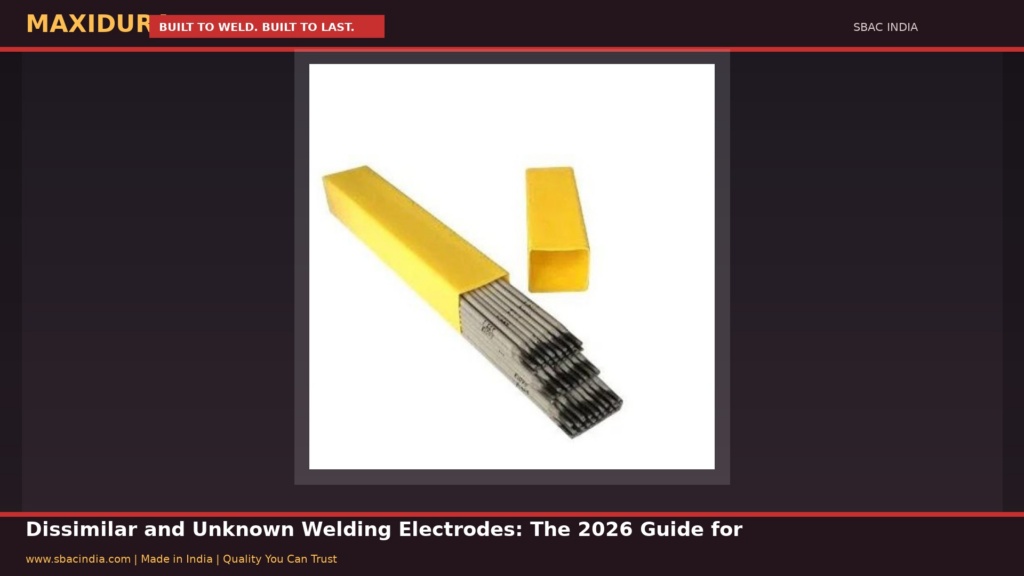
A welding electrode is a metal rod coated with flux that carries current and helps join metals during welding. In the Shielded Metal Arc Welding (SMAW) process, the electrode itself melts and becomes part of the weld joint.
The MAXIDURA Welding Electrode is specially designed to:
-
Provide stable arc performance
-
Ensure easy slag removal
-
Offer high tensile strength welds
-
Perform well on rusty, oily, or dirty metals
AWS Classification of MAXIDURA Welding Electrodes
The American Welding Society (AWS) has developed a classification system that makes it easy to identify electrodes based on their properties.
Example: E6013
-
E = Electrode for arc welding
-
60 = Tensile strength (60,000 psi)
-
1 = Suitable for all welding positions
-
3 = Flux coating and current type
Common MAXIDURA Welding Electrode types:
-
E6010 & E6011 → Deep penetration, used in pipelines and structural jobs
-
E6012 & E6013 → Smooth arc, ideal for thin sheets and light fabrication
-
E7018 → Low hydrogen, perfect for bridges, heavy machinery, and critical structures
Types of MAXIDURA Welding Electrode Coatings
1. Cellulose Coating (EXX10, EXX11)
-
Creates a strong gas shield (CO₂, H₂)
-
Produces deep penetration welds
-
Commonly used for pipeline and outdoor welding
2. Rutile Coating (EXX12, EXX13)
-
Smooth and quiet arc
-
Easy slag removal
-
Best for thin sheet metal and clean finishing
3. Low Hydrogen Coating (EXX18)
-
Reduces hydrogen-induced cracking
-
Ensures high ductility and toughness
-
Suitable for structural and pressure vessel welding
4. Iron Powder Coating (EXX14, EXX24, EXX28)
-
High deposition efficiency
-
Stronger weld bead formation
-
Useful for productivity-driven industries
Advantages of Using MAXIDURA Welding Electrodes
-
High Strength: Produces welds with strong mechanical properties
-
Consistency: Ensures uniform weld quality across jobs
-
Versatility: Suitable for different welding positions (flat, vertical, overhead)
-
User-Friendly: Smooth arc stability makes it easier for beginners
-
Industrial Grade: Reliable for heavy-duty applications
Deposition Rates and Efficiency
The deposition rate of an electrode directly affects productivity. The MAXIDURA Welding Electrode is designed with flux compositions and iron powder content that optimize metal deposition while maintaining arc control.
-
Cellulose-coated electrodes: Deeper penetration but moderate deposition
-
Iron powder electrodes: High deposition rate, more filler metal
Storage Guidelines for MAXIDURA Welding Electrode
To maintain performance, electrodes must be stored properly:
-
Keep in dry and moisture-free containers
-
For damp electrodes, re-dry at 260°C for 2 hours
-
Store in sealed electrode ovens
-
Avoid physical damage to the flux coating
Electrodes with an “R” suffix have higher moisture resistance, making them more durable in humid environments.
Common Welding Defects and How MAXIDURA Helps Avoid Them
-
Porosity: Caused by moisture or contaminants – prevented by dry storage and flux coating
-
Cracking: Hydrogen embrittlement – reduced with low hydrogen electrodes like E7018
-
Spatter & Slag Inclusion: Controlled by smooth arc performance and easy slag removal
Applications of MAXIDURA Welding Electrodes
-
Construction Industry – Bridges, high-rise buildings, and structural steel frameworks
-
Pipeline Welding – Oil, gas, and water pipelines requiring deep penetration
-
Shipbuilding – Strong welds for marine environments
-
Automotive Industry – Repairs and fabrication of vehicles and parts
-
General Fabrication – Small workshops, maintenance jobs, and DIY repairs
MAXIDURA Product Range
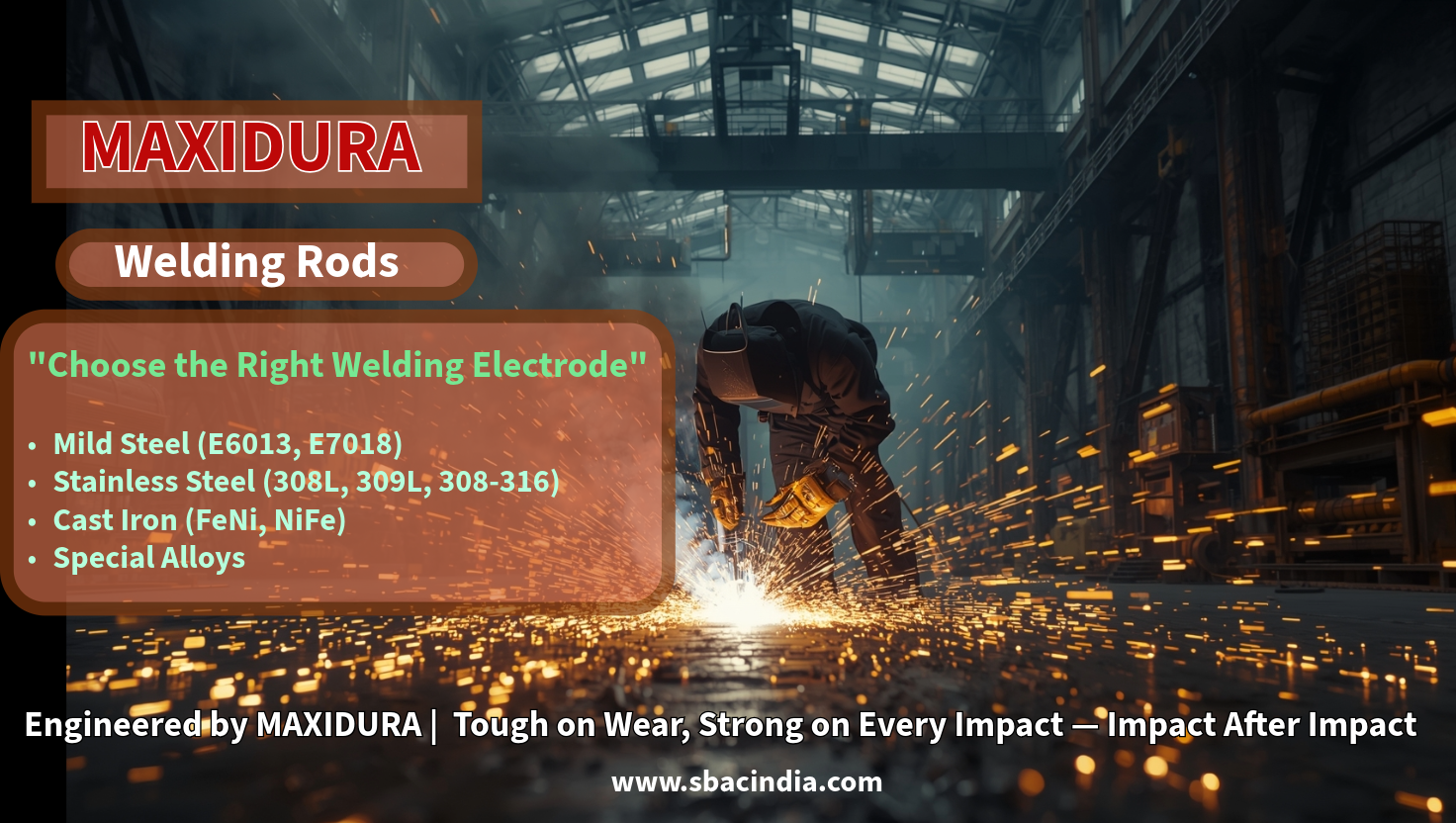
Mild Steel Electrodes
-
E6013 – Smooth arc, easy slag removal
-
E7018 – High strength, low hydrogen
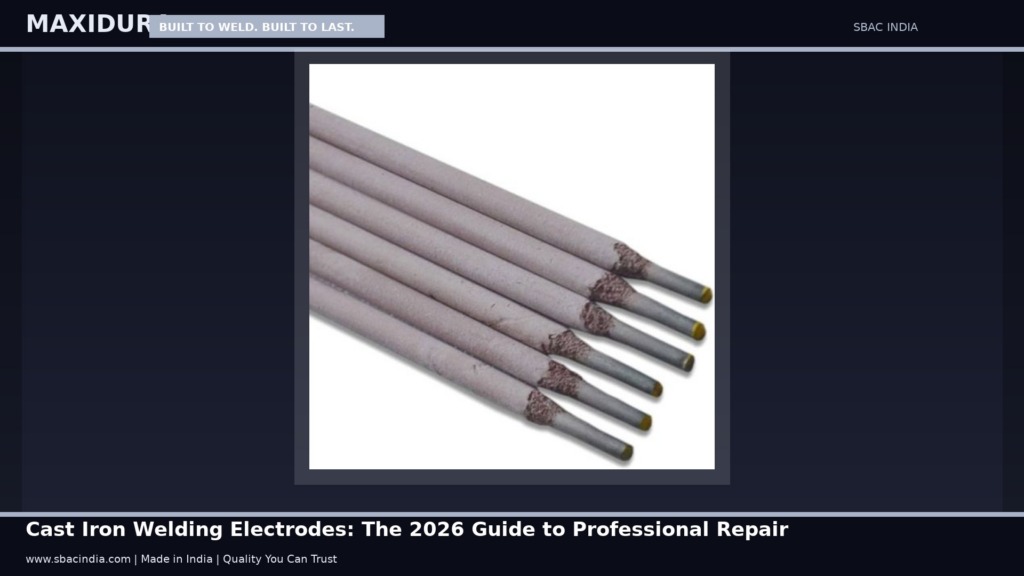
Cast Iron Electrodes
-
CI-109, CI-113, CI-114, CI-115, CI-116
-
Strong bonding for cast iron repairs
Stainless Steel Electrodes
-
308L, 309L, 310
-
Corrosion-resistant, high-performance electrodes
FAQs on MAXIDURA Welding Electrodes
Q1. Which MAXIDURA Welding Electrode is best for beginners?
E6013 is highly recommended because it is versatile and easy to use.
Q2. How do I prevent weld cracking?
Use low-hydrogen electrodes like E7018 and store them properly.
Q3. Can MAXIDURA electrodes be used outdoors?
Yes, electrodes like E6010 and E6011 are ideal for outdoor welding, even on rusty surfaces.
Q4. What makes MAXIDURA better than others?
MAXIDURA combines high-quality flux coatings, superior arc stability, and durability, ensuring consistent results.
Conclusion
The MAXIDURA Welding Electrode is the trusted choice for welders who demand strength, reliability, and efficiency. With AWS-classified options, specialized coatings, and superior arc stability, these electrodes are suitable for mild steel, stainless steel, and cast iron applications. From industrial construction to small-scale fabrication, MAXIDURA delivers welds that last.
By selecting the right electrode type, following storage guidelines, and applying proper technique, welders can achieve flawless, defect-free, and durable joints.