

Welding Rod: A Beginner-Friendly Guide to Types, Uses & Selection
Welding is much more than just fusing pieces of metal together—it is a craft that requires precision and the right tools. At the very heart of this process lies one essential element: the welding rod. Without the correct electrode, even the most skilled welder can end up with weak or flawed joints.
Therefore, choosing the proper welding rod (also called a welding electrode) becomes crucial for achieving strong, reliable, and lasting welds. Moreover, understanding the different types and their specific uses can save beginners from costly mistakes. In this guide, we’ll explore the basics of welding rods, their types, practical applications, and tips to select the best one for your project.
What Is a Welding Rod?
A welding rod (or welding electrode) is a crucial tool in welding. It acts as a conductor of current, and in most cases, it melts into the weld to join two base metals. Depending on the process, welding rods can be consumable or non-consumable.
For example, in Stick Welding (SMAW) and MIG Welding (GMAW), consumable rods are used. On the other hand, TIG Welding (GTAW) uses non-consumable tungsten electrodes with a separate filler rod if required.
🔹 Why Welding Rods Matter
Choosing the right welding rod is essential. Not only does it determine the strength and durability of the weld, but it also impacts corrosion resistance, appearance, and ease of handling. Moreover, the wrong electrode can lead to porosity, cracks, or weak joints. Therefore, understanding different types of welding rods is the first step toward better welding results.
🔹 Types of Welding Rods
1. Consumable Welding Rods
-
Stick Welding Rods (SMAW): Coated electrodes such as E6010, E6013, and E7018.
-
MIG Wires (GMAW): A consumable wire that continuously feeds from a reel and melts into the weld pool.
2. Non-Consumable Welding Rods
-
TIG Electrodes (GTAW): Tungsten rods that do not melt but generate the arc. If filler is needed, a separate rod is added by hand.
🔹 Popular Welding Rods and Their Uses
| Welding Rod | Description | Best Applications |
|---|---|---|
| 6010 | Deep penetration, fast-freezing slag | Root pass welding of pipes, tanks, and repair jobs |
| 6013 | Smooth arc, easy handling, all positions | Ideal for beginners, sheet metal, and general fabrication |
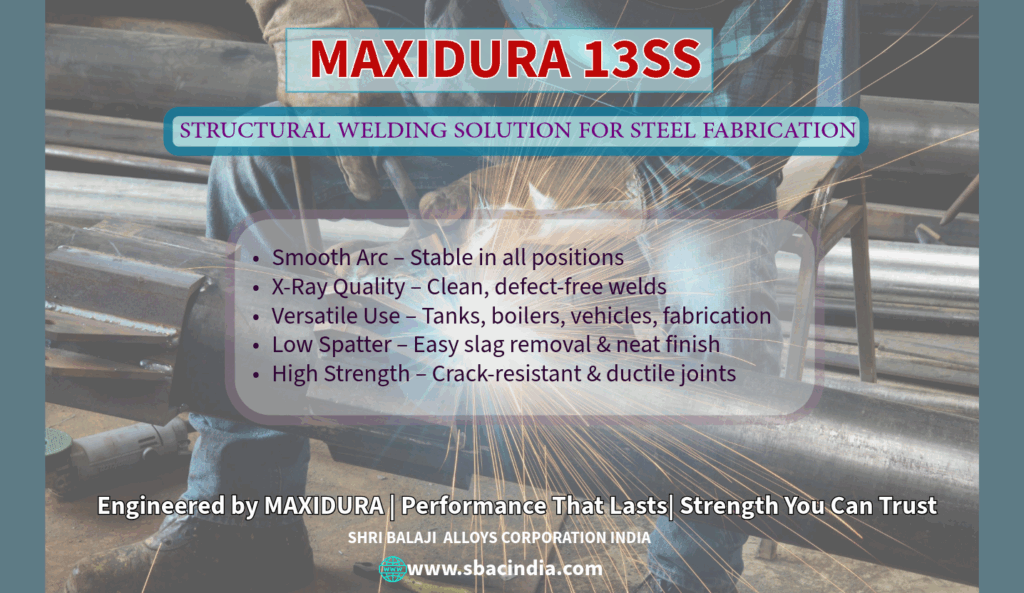
| 7018 | Low hydrogen, high strength, excellent toughness | Structural welding, bridges, pressure vessels |
For beginners, E6013 is easiest to work with. However, for critical structural applications, E7018 is usually the best choice.
🔹 Welding Rods for Different Materials
Mild Steel Welding Rods
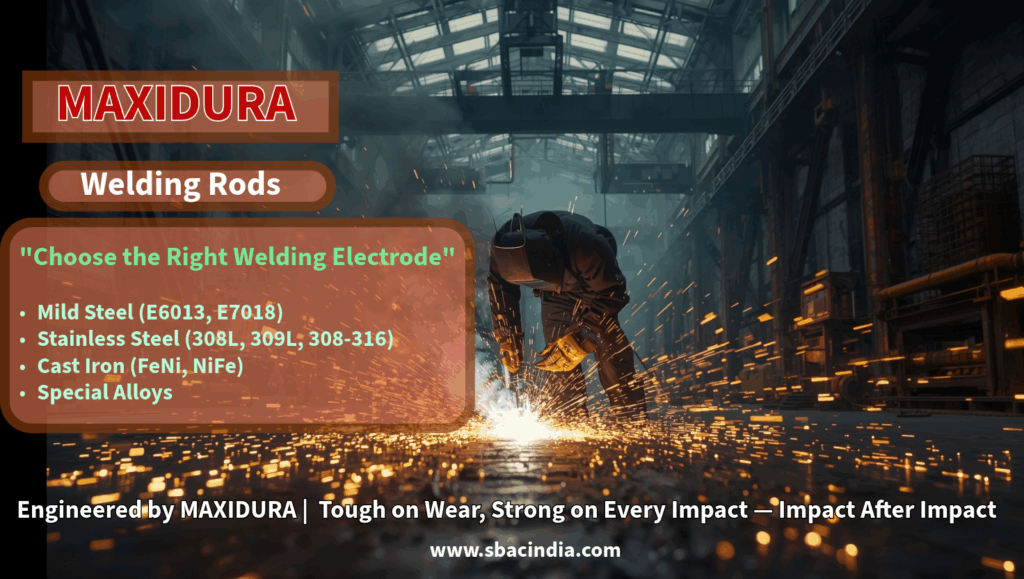
Mild steel electrodes are the most versatile and affordable. They are widely used in construction, repair, and fabrication. Common choices include E6010, E6013, and E7018.
Stainless Steel Welding Rods
These electrodes provide corrosion resistance and strength at high temperatures. They are often used in food processing, pharmaceutical, and petrochemical industries. Read more about Stainless Steel Welding Electrodes →